
Custom cellular shade blinds for skylights — made and installed by DDI’s own team from our Russell Lea showroom, with 30+ years of experience behind every fitting.
Skylight Blinds Inner West Sydney
Why Inner West Homes Need Skylight Blinds
Skylight blinds Inner West Sydney homes rely on are purpose-built to manage the heat and glare that standard skylights let straight through. Skylight blinds are custom-fitted window coverings designed to sit flush against sloped or flat skylight glazing, blocking or diffusing light without trapping moisture. North-facing skylights in Drummoyne and Concord brick veneer homes can increase a room’s temperature significantly on summer afternoons. Cellular shades address this directly. Their honeycomb cell structure traps air to insulate — keeping rooms cooler in summer and warmer in winter. In 2026, homeowners are increasingly pairing cellular shades with cord-free or motorised operation for daily ease.
- Cellular honeycomb structure traps air for year-round insulation.
- Translucent and blockout fabric options to suit any room
- Custom-cut to fit sloped, flat, or irregular skylight frames
- Cord-free operation available — safer for homes with children
- Fabrics rated for UV filtration and glare reduction
- 2-year warranty on all products and installation
Our Full Range of Custom Blinds Sydney
Custom Blinds
Not every window is standard size, and skylight openings rarely are. Custom blinds Sydney from DDI are cut to measure at our Russell Lea studio, making them a practical choice for the angled frames and non-standard dimensions common in Federation homes across Balmain and Leichhardt. Every custom blind is fitted by our own installation team.
Roller Blinds
A reliable option for living areas and bedrooms, roller blinds Sydney suit rooms where a clean, flat finish is the priority. Available in blockout and light-filtering fabrics, they work well in contemporary Inner West apartments where privacy and solar control matter. DDI carries a broad fabric range across opacity levels to match any interior.
Roman Blinds
Roman blinds fold neatly upward when open, making them a natural fit for rooms with strong decorating themes — period-style kitchens in Concord or soft linen interiors in Rozelle. Fabric choice is wide, and DDI’s decorator can bring samples to your home for matching under real room-light conditions before any commitment.
Venetian Blinds
Venetian blinds give fine-grain control over light direction. Tilting the slats lets you redirect afternoon glare upward while maintaining an outdoor view — useful in Inner West homes with tight side boundaries or north-facing living rooms. Available in timber, aluminium, and PVC finishes to suit period and contemporary interiors alike.
Glide Panel Blinds
Glide panel blinds are a clean solution for wide openings — sliding stacker doors, bi-fold entries, or large window walls common in Drummoyne and Five Dock renovations. Panels glide along a ceiling-mounted track and can be arranged in multiple stacking configurations depending on the space available.
Luxaflex® Blinds
Luxaflex blinds Sydney include Duette® cellular shades — the most specified honeycomb blind for skylights in Australia. DDI is an authorised Luxaflex® showroom in Russell Lea, meaning our team has direct access to the full Duette® range, including specialty skylight configurations not available through general retailers.
Skylight Blind Installations Across Inner West Sydney
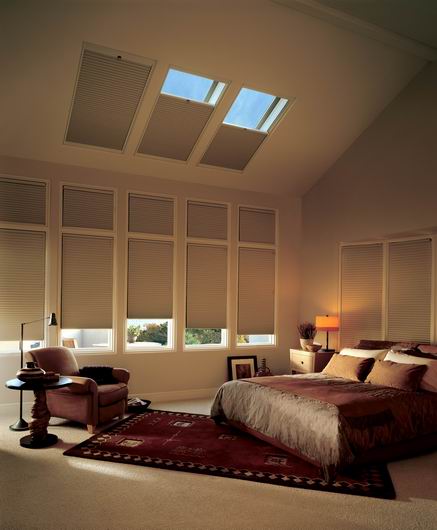
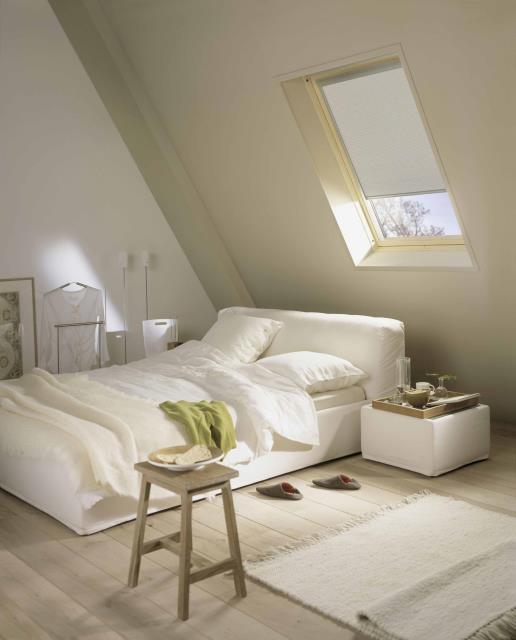
We offer a wide array of blinds aimed at simplifying your life and improving your home
What our customers say
Fabrics and Systems Used in Our Skylight Blinds
Cellular skylight blinds from DDI are made using honeycomb-weave fabrics selected for their thermal performance and light management. Single-cell fabrics suit mild climates; double-cell construction is specified for rooms with significant solar exposure, such as north-facing atrium spaces in Homebush or Strathfield homes. Translucent fabrics diffuse light while softening glare. Blockout linings eliminate light completely for bedroom skylights. DDI’s skylight blinds are built with hardware from Hunter Douglas Australia, whose Duette® system is purpose-engineered for inclined installations. Luxaflex® fabrics complete the range, offering UPF-rated options across 30+ colour options.
From In-Home Measure to Finished Installation
Every skylight blind project at DDI begins with a home visit. A qualified decorator arrives at your property with a full fabric sample kit. You choose from translucent, light-filtering, and blockout options under your actual room light — not a showroom. We measure the skylight on-site because sloped frames and irregular glazing bars require precision that an online self-measure cannot match. Blinds are manufactured at DDI’s own Sydney studio, then installed by our own team. No subcontractors. To arrange a visit, call us on (02) 9712 2722 or stop in at 104 Hampden Road, Russell Lea, Monday to Friday, 9:00 am to 5:00 pm. You can also book a free in-home consultation online.
Inner West Sydney’s Skylight Blind Specialists
DDI has been fitting custom window treatments from Russell Lea since 1991 — over 30 years of measuring, making, and installing in Sydney homes. We hold authorised Luxaflex® showroom status and are the Inner West’s only Hunter Douglas Gallery, giving our clients access to Duette® cellular shade systems that are not available through general blind retailers. Every installation carries a 2-year warranty on products and workmanship. Our qualified decorators serve Drummoyne, Concord, Balmain, Leichhardt, Burwood, Strathfield, and surrounding suburbs. For related treatments, see our range of thermal insulating curtains — a popular pairing with skylight blinds in rooms that need both solar and acoustic performance.
Frequently Asked Questions — Skylight Blinds Sydney
Q1: What are skylight blinds called?
A1: The most common type is a cellular shade, also called a honeycomb blind. Duette® by Hunter Douglas is the leading brand in Australia. These are custom-cut to fit the glazing frame of the skylight, sitting flush and sealed to prevent light gaps. Some suppliers also refer to them as pleated skylight blinds.
A1: The most common type is a cellular shade, also called a honeycomb blind. Duette® by Hunter Douglas is the leading brand in Australia. These are custom-cut to fit the glazing frame of the skylight, sitting flush and sealed to prevent light gaps. Some suppliers also refer to them as pleated skylight blinds.
Q2: Do skylight blinds actually block heat?
A2: Yes. Cellular shades use an air-trapping honeycomb structure to insulate the glazing from above. In Sydney’s summer climate, this reduces radiant heat gain through north-facing skylights. A double-cell fabric provides stronger insulation than a single-cell fabric. Studies show cellular shades can reduce heat gain through glazing by up to 40% compared to an uncovered skylight.
A2: Yes. Cellular shades use an air-trapping honeycomb structure to insulate the glazing from above. In Sydney’s summer climate, this reduces radiant heat gain through north-facing skylights. A double-cell fabric provides stronger insulation than a single-cell fabric. Studies show cellular shades can reduce heat gain through glazing by up to 40% compared to an uncovered skylight.
Q3: Can skylight blinds be installed on any skylight shape?
A3: Most sloped, flat, and pitched skylights can be fitted. Irregular shapes and heritage glazing bars require on-site measurement to confirm. DDI’s team measures at your property before manufacture to ensure a precise fit. Custom blinds Sydney from DDI are cut to your exact skylight dimensions, not adapted from standard sizes.
A3: Most sloped, flat, and pitched skylights can be fitted. Irregular shapes and heritage glazing bars require on-site measurement to confirm. DDI’s team measures at your property before manufacture to ensure a precise fit. Custom blinds Sydney from DDI are cut to your exact skylight dimensions, not adapted from standard sizes.
Q4: How much do skylight blinds cost in Australia?
A4: Pricing depends on skylight size, fabric type, and whether motorisation is included. Custom cellular shades for a standard 900mm x 900mm skylight typically start around $400–$600 installed. For independent guidance on product performance standards, the Window Shading Association of Australia publishes consumer resources on blind selection and thermal ratings. DDI provides written quotes at no charge.
A4: Pricing depends on skylight size, fabric type, and whether motorisation is included. Custom cellular shades for a standard 900mm x 900mm skylight typically start around $400–$600 installed. For independent guidance on product performance standards, the Window Shading Association of Australia publishes consumer resources on blind selection and thermal ratings. DDI provides written quotes at no charge.
Q5: Are motorised skylight blinds worth it?
A5: For skylights in high or hard-to-reach ceiling positions, motorisation is strongly recommended. Manual operation of a ceiling-mounted blind is awkward and wears the fabric over time. Motorised systems from Somfy allow smartphone or remote control. DDI can specify and install motorised cellular shades as part of the same custom manufacturing process.
A5: For skylights in high or hard-to-reach ceiling positions, motorisation is strongly recommended. Manual operation of a ceiling-mounted blind is awkward and wears the fabric over time. Motorised systems from Somfy allow smartphone or remote control. DDI can specify and install motorised cellular shades as part of the same custom manufacturing process.
The Highest Quality Brands
We offer a wide variety of fabrics, materials, furnishings, fittings and related products from industry leaders, including:


Book Your Skylight Blind Consultation
Our decorators have been fitting cellular skylight blinds across Inner West Sydney for over 30 years.
Visit us at 104 Hampden Road, Russell Lea NSW 2046, or call (02) 9712 2722 to arrange a free in-home measure. We’re open Monday to Friday, 9:00 am to 5:00 pm. Your decorator will bring fabric samples to your home, measure the skylight on-site, and provide a clear written quote — no obligation, no pressure.